



Introduction
Artificial Intelligence (AI) has emerged as one of the most transformative technological advancements of the twenty-first century. From smartphones and search engines to healthcare diagnostics and financial systems, AI tools have become deeply embedded in everyday life. AI refers to the ability of machines or software systems to simulate human intelligence processes such as learning, reasoning, problem-solving, perception, and language understanding. AI tools are applications or platforms that use these capabilities to perform tasks that traditionally required human intelligence.
The rapid growth of Artificial Intelligence tools has changed how individuals work, learn, communicate, and make decisions. While these tools offer efficiency, accuracy, and innovation, they also raise important ethical questions regarding privacy, bias, employment, and accountability. This essay explores the importance of AI tools, some of the best AI tools currently in use, the fields in which they are applied, and the ethical considerations that must guide their responsible use.
Importance of AI Tools
AI tools play a crucial role in modern society due to their ability to process vast amounts of data quickly and accurately. One of the primary reasons for the importance of Artificial Intelligence tools is automation. AI tools can automate repetitive and time-consuming tasks, allowing humans to focus on more creative, strategic, and meaningful work. For example, automated customer support systems, data analysis tools, and scheduling assistants significantly reduce workload and increase productivity.

Another major importance of AI tools lies in decision-making. AI – powered systems can analyze patterns and trends in data that may not be visible to the human eye. In sectors like healthcare and finance, this leads to better predictions, reduced risks, and improved outcomes. AI tools can detect diseases early, predict market trends, and identify fraud more efficiently than traditional methods.
AI tools also contribute to personalization. Platforms such as streaming services, online shopping websites, and educational applications use Artificial Intelligence to recommend content based on individual preferences. This enhances user experience and engagement. In education, Artificial Intelligence tools can adapt learning materials to suit a student’s pace and style, making learning more inclusive and effective.
Furthermore, the importance of AI tools is seen in innovation and economic growth. They enable businesses to develop new products, improve services, and expand into global markets. Countries investing in AI technologies are better positioned to compete in the digital economy, making AI tools essential for national development and progress.
Best Artificial Intelligence Tools in Use Today
There are numerous Best AI tools in use today, each designed to serve specific purposes across different domains.
One of the most well-known Artificial Intelligence tools is ChatGPT, an AI-powered language model that can generate human-like text, answer questions, assist with writing, and provide explanations across a wide range of topics. It is widely used in education, content creation, customer service, and research assistance.
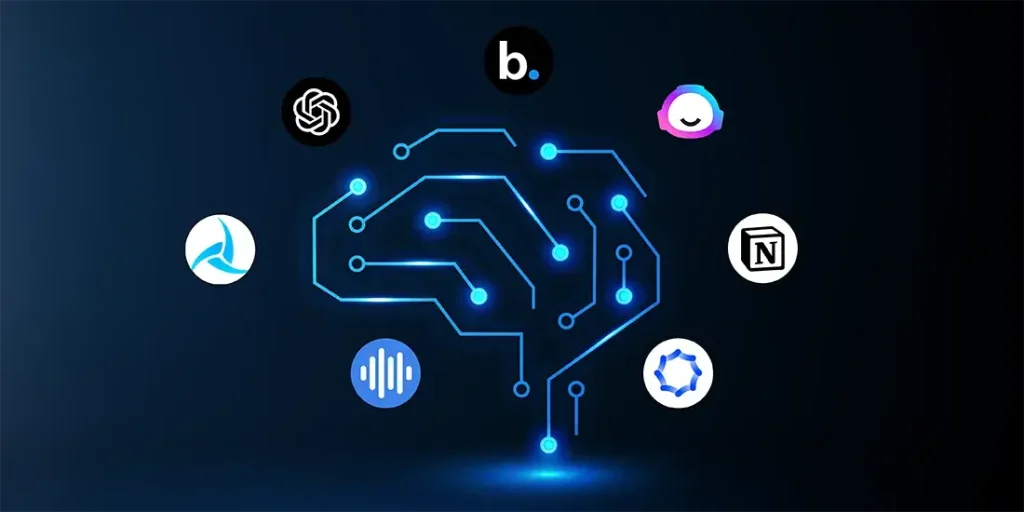
Google Bard (now integrated with Gemini Artificial Intelligence) is another of the best Artificial Intelligence tools in use today that helps users with information retrieval, writing assistance, and problem-solving. It integrates AI capabilities with Google’s search ecosystem, making information access faster and more conversational.
In the field of design and creativity, Canva AI and Adobe Firefly are popular tools. They assist users in creating designs, presentations, and visual content using Artificial Intelligence-generated templates, images, and suggestions. These tools make design accessible even to non-professionals.
For coding and software development, tools like GitHub Copilot help programmers by suggesting code snippets, detecting errors, and improving efficiency. It acts as an AI – powered coding assistant, especially useful for beginners and professionals alike.
In data analysis, tools such as Tableau AI and IBM Watson help organizations analyze large datasets, generate insights, and make data-driven decisions. These tools are widely used in business intelligence and research.
Fields Where Artificial Intelligence Tools Are Used
Artificial Intelligence tools are used across a wide range of fields, reshaping traditional practices and introducing new possibilities.
1. Healthcare
In healthcare, one of the major fields where AI tools are used for disease diagnosis, medical imaging, drug discovery, and patient management. AI-powered healthcare systems can analyze X-rays, MRIs, and CT scans to detect diseases such as cancer at early stages. Virtual health assistants help patients track symptoms and receive medical guidance. AI tools also assist doctors in creating personalized treatment plans.
2. Education
AI tools in education support personalized learning, automated grading, and academic assistance. Learning platforms use Artificial Intelligence to adapt lessons according to a student’s strengths and weaknesses. Teachers benefit from AI tools that help create lesson plans, quizzes, and assessments. AI also supports students with disabilities through speech-to-text and text-to-speech technologies.
3. Business and Marketing
Business and marketing are important fields where Artificial Intelligence tools are used for customer relationship management, market analysis, and advertising. AI-driven marketing tools analyze consumer behavior to deliver targeted advertisements. Chatbots handle customer queries 24/7, improving customer satisfaction and reducing operational costs.
4. Finance
AI tools in finance are used for fraud detection, credit scoring, risk management, and algorithmic trading. Banks and financial institutions use Artificial Intelligence to monitor transactions and identify suspicious activities. AI-powered investment tools help individuals make informed financial decisions.
5. Media and Entertainment
Streaming platforms like Netflix and Spotify use AI tools to recommend movies, shows, and music based on user preferences. AI is also used in video editing, game development, and content moderation on social media platforms.
6. Agriculture
In agriculture, AI tools help farmers monitor crop health, predict weather patterns, and optimize irrigation. AI-powered drones and sensors improve farming efficiency and reduce resource wastage, contributing to sustainable agriculture.
7. Transportation
AI tools are essential in navigation systems, traffic management, and autonomous vehicles. Ride-sharing apps use AI to match drivers and passengers efficiently, while self-driving car technology relies heavily on AI for decision-making and safety.
Ethical Use of Artificial Intelligence Tools
Despite their many advantages, the Ethical use of AI tools raises significant concerns that must be addressed to ensure responsible use.
One major ethical issue is privacy. AI tools often rely on large amounts of personal data to function effectively. If this data is misused or inadequately protected, it can lead to privacy violations. Organizations must ensure transparent data collection practices and secure storage systems.
Another concern is bias and discrimination. AI systems learn from existing data, which may contain social biases. If not carefully designed, AI tools can reinforce stereotypes and unfair treatment in areas such as hiring, law enforcement, and lending. Ethical AI development requires diverse datasets and continuous monitoring to minimize bias.
Job displacement is also a critical ethical issue in the Ethical use of Artificial Intelligence tools. While AI tools increase efficiency, they can replace certain jobs, particularly repetitive and manual roles. Ethical implementation of Artificial Intelligence should focus on reskilling and upskilling workers rather than simply replacing them.
Transparency and accountability are equally important. AI systems should be explainable, meaning users should understand how decisions are made. When AI tools cause harm or make errors, it must be clear who is responsible—the developer, the organization, or the system itself.
Lastly, AI tools should be used to support human intelligence, not replace it entirely. Ethical AI emphasizes collaboration between humans and machines, ensuring that human judgment, empathy, and moral reasoning remain central.
FAQ
Q1. What is currently the best available tool in the field of AI image creation?
Gemini
Q2. Best AI tools according to design features
Adobe
Q3. Could the teachers be replaced by those kinds of AI tools?
No But Knowledge Based fields which can be fully substituted by AI but here as Personalized Guidance only teachers can provide that.
Q4. What are the Factors of choosing the right AI tool?
Fundamentally, depending upon the purpose that uses AI for the greater accessibility of knowledge and flexibility
Conclusion
AI tools have become indispensable in the modern world, transforming industries, improving efficiency, and opening new opportunities for innovation. From healthcare and education to business and agriculture, their applications are vast and impactful. The best Artificial Intelligence tools enhance productivity, creativity, and decision-making, making life more convenient and connected.
However, the power of AI tools comes with responsibility. Ethical concerns such as privacy, bias, job displacement, and accountability must be carefully addressed to ensure that Artificial Intelligence serves humanity positively. When used responsibly and ethically, AI tools have the potential to create a future that is not only technologically advanced but also fair, inclusive, and human-centered.
In conclusion, AI tools are not merely machines or software—they are powerful partners in human progress. Their true value lies not just in what they can do, but in how wisely and ethically they are used.
For More Trending Topics visit AdscapeHub
Follow Us on Instagram
