

Introduction- Understanding the Unrest in Nepal
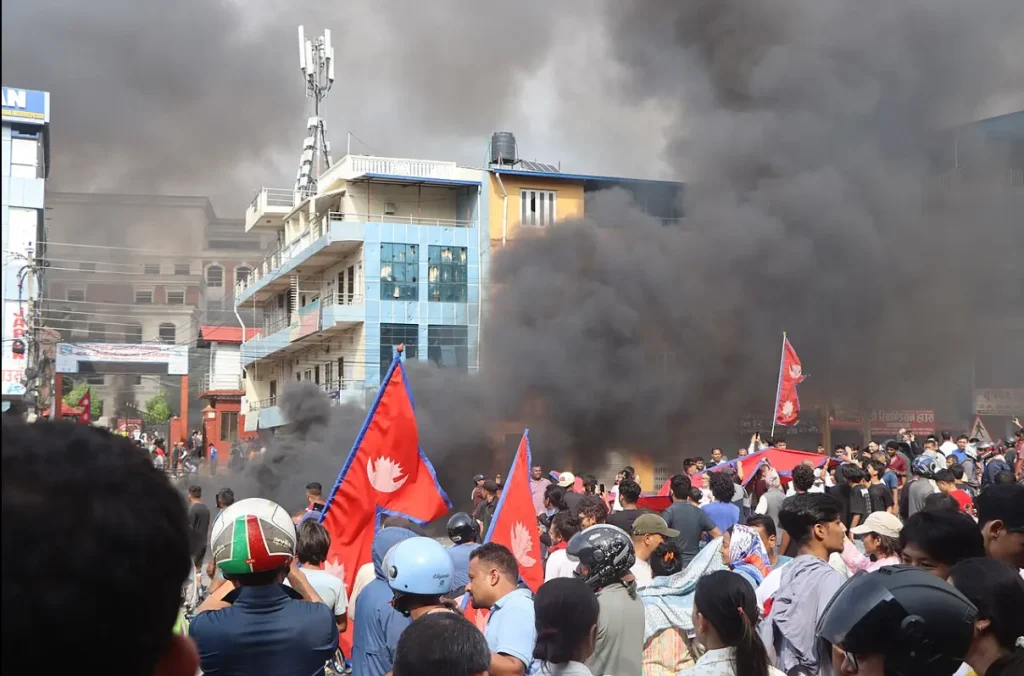
In recent months, Nepal protests have seen a surge which has captured international attention. The unrest in Nepal caused by many citizens to students by ending with professionals, all of these have gathered in major cities like Kathmandu, Pokhara and Biratnagar. Many of their voices show frustration over economic hardship, government inefficiency and some unfulfilled promises. These included small small demonstrations which lead to inflation and corruption which has been turned into a symbol of nationwide discontent.
Nepal Protests aren’t just any another protest. It is the damage for accountability. Many Nepalese feel left behind as their leaders argue among themselves while everyday life becomes harder. As prices of goods were rising, youth unemployment growing and political instability, the environment of the country has been turned from patient to restless. The streets are filled with chants and a strong sense is that something needs to be changed. The unrest in Nepal has caused a huge havoc worldwide.
Historical Background of Political Movements in Nepal
On 4th September 2025, The Government of Nepal ordered the shutdown of 20+ media platforms including popular ones like Facebook, X, YouTube, LinkedIn, Reddit, Signal, and Snapchat. The reason given to hide the political movement was that these platforms had failed to register under new rules that were introduced by the Ministry of Communication and Information Technology. Officials claimed the move was part of an effort to implement a new Digital Services Tax and strengthen Value-Added Tax (VAT) regulations on foreign digital companies to increase national revenue. This fueled the reasons of Nepal Protests.

People argued that the shutdown was a political movement coming soon after a viral social media trend that exposed nepotism among Nepal’s political elite particularly the special treatment and privileges enjoyed by the children and relatives of powerful leaders. To many citizens, the ban seemed less about taxes and more about silencing criticism.
The Gen Z Movement That Took an Unexpected Turn
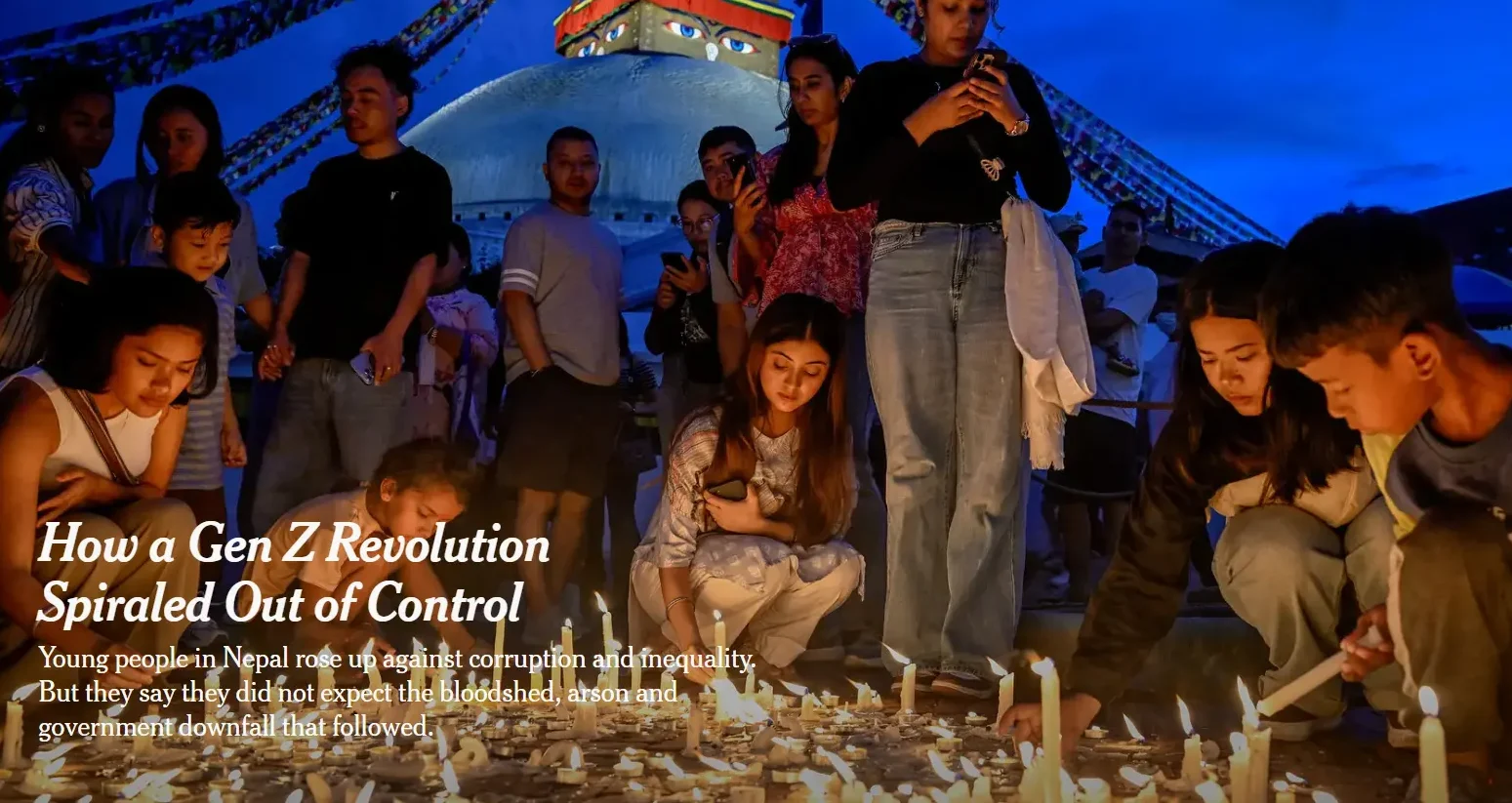
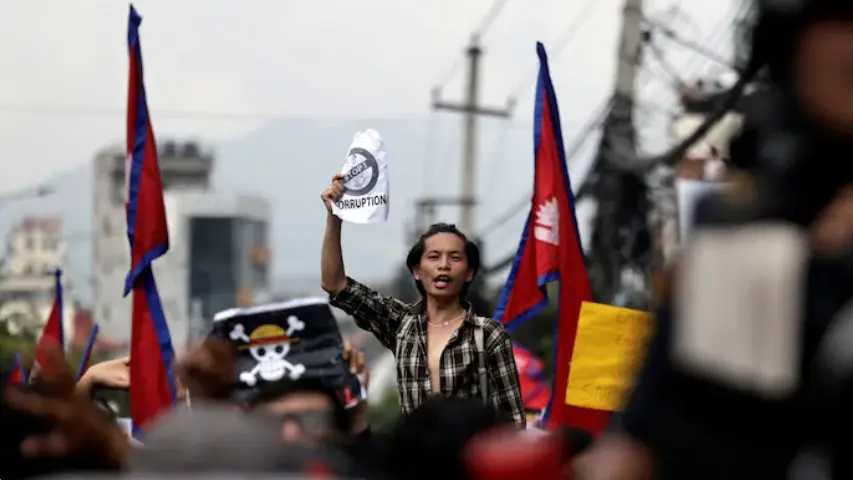
Young people stood up against corruption and inequality, and they are hoping for change and justice through the Nepal Protests. But many of them say that they never imagined that it would lead to such chaos with violence on the streets, buildings set on fire, and the government facing a serious crisis.
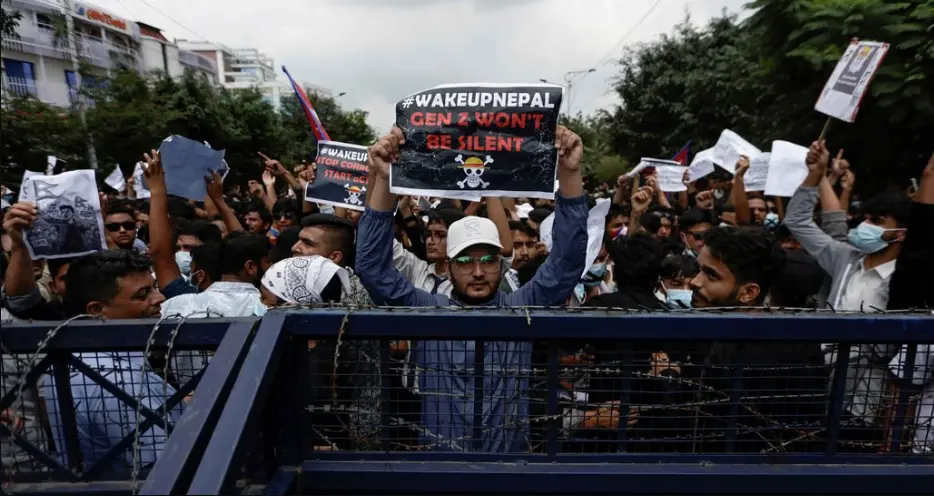
Nepal’s youth have emerged as leaders of a Gen Z movement as they are trying to turn online outrage at the privileged nepotism kids into real political action. But they are economically frustrated, tech-savvy, and highly educated and they reflect a wave of young people’s rebellion which is seen across Asia in recent years. Yet many did not anticipate the violence and chaos in the nepal protests, and government conflict that followed.
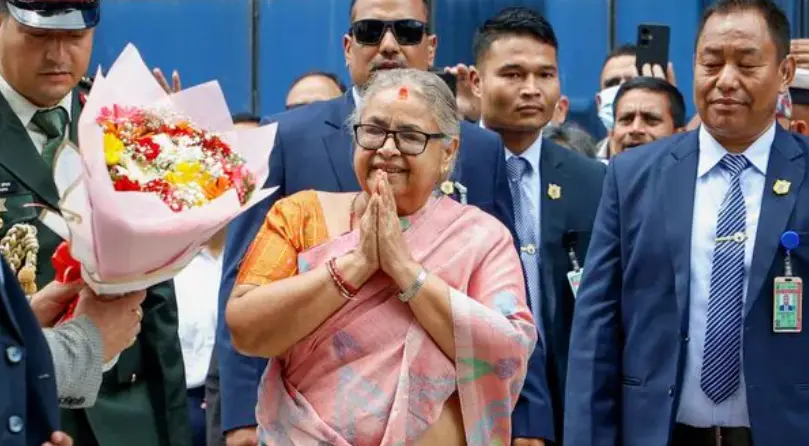
After the government collapsed, thousands supported the appointment of Sushila Karki corruption-fighting former chief justice, as being the Nepal’s first female prime minister. While elections are scheduled for March, many young protesters say that their goal is to reform, not revolution. “I don’t know what happened, but the whole thing was hijacked,” said Tanuja Pandey, one of the movement’s organizers, capturing the surprise and mixed feelings of the Gen Z movement.
Government Response and Public Reactions
Government Response
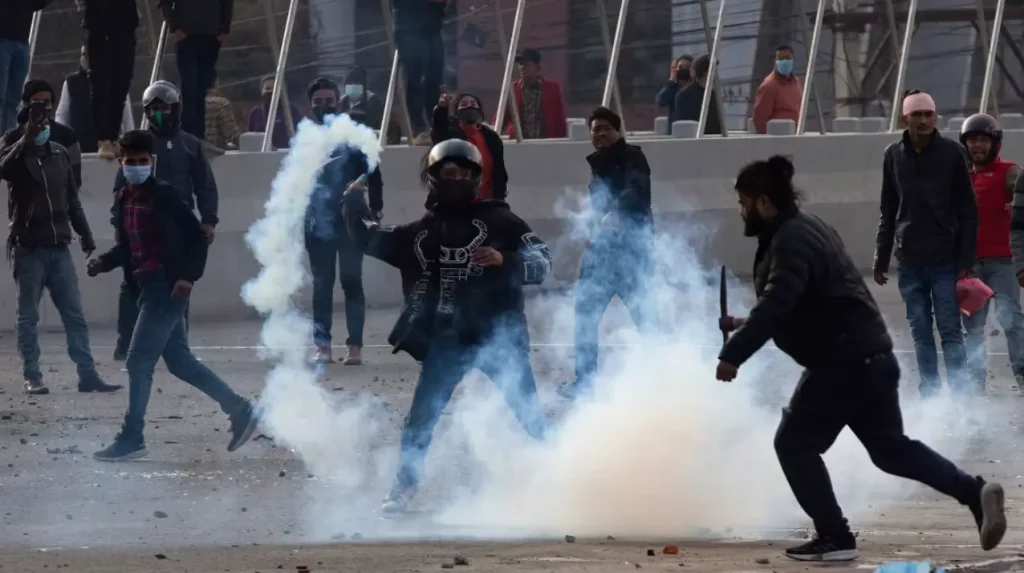
When the Nepal protests began, the government’s response was to use tear gas, rubber bullets and water cannons against demonstrators, many of them were young students.
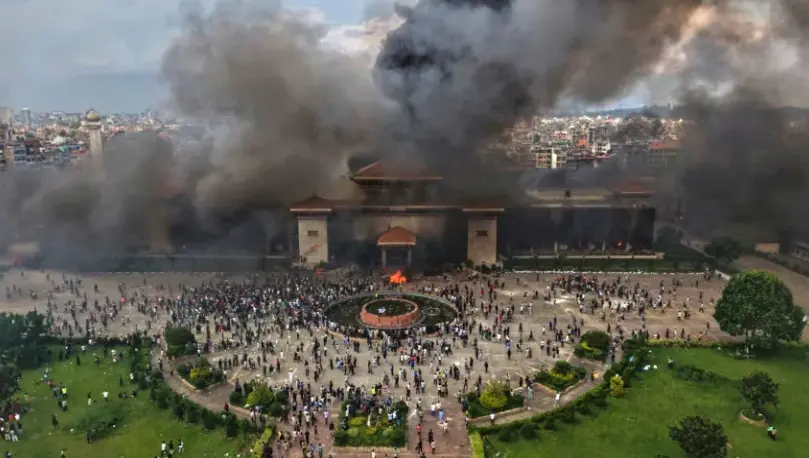
The situation immediately escalated with police employing excessive force which lead to 72 deaths that included minors and hundreds injured. In these kind of several instances protests turned violent with fires that were breaking out in government buildings which include parliament and supreme court.
Officials from Sushila Karki’s government responded that the families who lost their loved ones during the Nepal protests will receive 1 million Nepalese rupees in compensation. It is the maximum allowed by law, which is roughly US$7,000 as of September 2025. Those people that got injured in the demonstrations would also be provided with some financial support. But at the same time, Karki could be called out for the unity in order to rebuilt the country.
On the day of 14 September Karki held a moment of silence for people killed in the Nepal Protests. Karki urged calm and cooperation that emphasises the need to restore stability. She rebuked the destruction that was caused during the protests and stated with some acts of arson that appeared to be planned in advance. Karki vowed to investigate any conspiracies behind the violence and held that no one would be spared. She clarified that her government would remain in power for a maximum of six months and will be focusing on recovery and preparation for upcoming elections.
Public Reaction
The public reaction came with great Intensity. The Nepal Protests were largely driven by that Generation Z which includes students, content creators and social activists that help take pride in standing together. They saw their actions as the fight for free speech, transparency and justice, challenging the widespread corruption and nepotism that has long plagued the country. This statement overall sumps up the public reaction.
Economic and Social Impact of the Protests
The economic and social impact of the Nepal Protests adversely affected the people in Nepal. Many disastrous things took place which led to chaos all around the place.
Some of the social and economic impacts are mentioned below:
- Job Losses and Business Damages:
Nearly of about 10,000 people lost their jobs overnight as businesses shut down and properties were destroyed in the Nepal Protests. Major retail stores, car dealers and hotels also suffered heavy losses which has impacted their supply chains and employment.
- Dependence on overseas Income Exposed:
Nepal’s economy depends heavily on money that is sent home by people working abroad which makes up more than over quarterly of GDP. The recent political instability has put this system at risk as it may affect both workers that is going overseas and household incomes making the economy more fragile.
- Investor Confidence and Growth Outlook:
Investor lost faith in Nepal’s economy due to the Nepal Protests with that of growth projections and now the country’s growth rate is expected to drop below 1 percent. Many of these infrastructure projects and foreign investments have been put on hold due to ongoing uncertainty.
- Political Shake Up:
The Protests led to the resignation of Prime minister K.P. Sharma oil and the appointment of Sushil Karki as interim leader. It marked significant political change that is forced by activism of youth culture.This marked a major political turning point driven by the power.
- Call for structural reforms:
The crisis caused by the Nepal Protests exposed long standing weaknesses in education, job opportunities, employment services and institutional transparency. Protesters demanded major changes that how country should run and more inclusive approach to the youth empowerment.
Media Coverage
DOMESTIC MEDIA COVERAGE
In Nepal, it became very hard for media to report news. Big TV channels like Kantipur TV, ABC Television, Avenues TV and ITV Nepal had to stop their broadcasting as the protests got bigger. Protesters burned the media offices. Several local media stations and online news offices were damaged. Journalists reporting the Nepal protests were attacked by both police and angry crowd – four reporters were hurt and press vehicles were set on fire in Butwal and Kaski districts. The domestic media was challenged by many hindrances.
Some Nepali journalists said the government was using cyber laws to scare the media. Dil Bhusan Pathak has an arrest warrant under the Electronic Transactions Act but the court later cancelled it.
Many local reporters and some of the domestic media started using Telegram, VPNs and other encrypted apps to share news after the government banned 26 social media platforms.
INTERNATIONAL MEDIA RESPONSE
Global news outlets or the International media which includes Associated Press(AP), BBC and Reuters reported the events in detail. Journalist from AP captured the chaos in Kathmandu, showing protesters breaking into parliament and setting government buildings on fire. The BBC and CNN described the Nepal protests as a part of a bigger Gen-Z-led movement for digital rights that led to Prime Minister’s removal. It also changed how people talk about corruption and censorship. The International Media helped spread this news worldwide which has made this a trending topic.
The Road Ahead for Nepal’s Democracy
Nepal’s Democracy after 2025 Gen Z uprising – The Nepal Protests – faces both chances and risks. When Prime Minister K.P. Sharma Oli resigned and former Chief Justice Sushila Karki became interim prime minister. It created a opportunity for reform. The country still facing serious problems which need to be resolved.
Nepal is getting ready for new parliamentary election in March 2026. This election will be under the interim government led by Sushila Karki. Her government has three main goals:
(1) Hold elections on time
(2) Investigate corruption and State violence
(3) Rebuild public trust in government institutions.
These reforms face problems because political parties don’t want to lose their power. But these reforms will also ensure increase in the Nepal’s democracy.
Be it that the Nepal Protests has led to a lot of damages to the economy aswell as the country but it also has definitely led to good changes in Nepal.
GenerationZ has become a strong political force in Nepal but turning their acitivism into organized politics is still a challenge. Some urban youths support ideas like “directly elected executive” but these proposals could upset Madhesi, Janjati and Tharu communities who depend on proportional representation to have a voice in govenment.
A NATION at a crossroads
Nepal now find itself at a true crossroads – politically, economically and socially. The Nepal protests were not just about corruption, it reflected a deeper crisis in the country which includes poor governance, struggling economy and frustration among younger generation.
The interim government supervised by former Chief Justice Sushila Karki, she represents both hope and fragility for Nepal. Public trust in politicians is deeply damaged. Experts warn that without major reforms and accountability Nepal could drift toward autoritarian rule as rival parties struggle to regain power.
Nepal is at an important point in history. The decisions made in the next few months – whether the country chooses to include everyone in reforms or keeps fighting over power. This will decide if Nepal can turn its problems into progress or if it will keep facing the same instability as before.
This summarises the title “a Nation at a crossroad” perfectly.
Conclusion
The Nepal Protests has led to worldwide awareness in the youth about the power they hold. The future of the youth of any country is in their hands and it is the choice of the citizens of the country whether they want to be oppressed or whether they want their voices to be heard. The government should work for them and not vice versa. The youth of Nepal is demanding Justice and equality in Nepal
For more content, visit Adscapehub
Follow Me on Instagram